TN Employment Law Updates
What’s New in Tennessee Labor Laws (2025): A Clear Look at the Key Changes for Workers and Employers
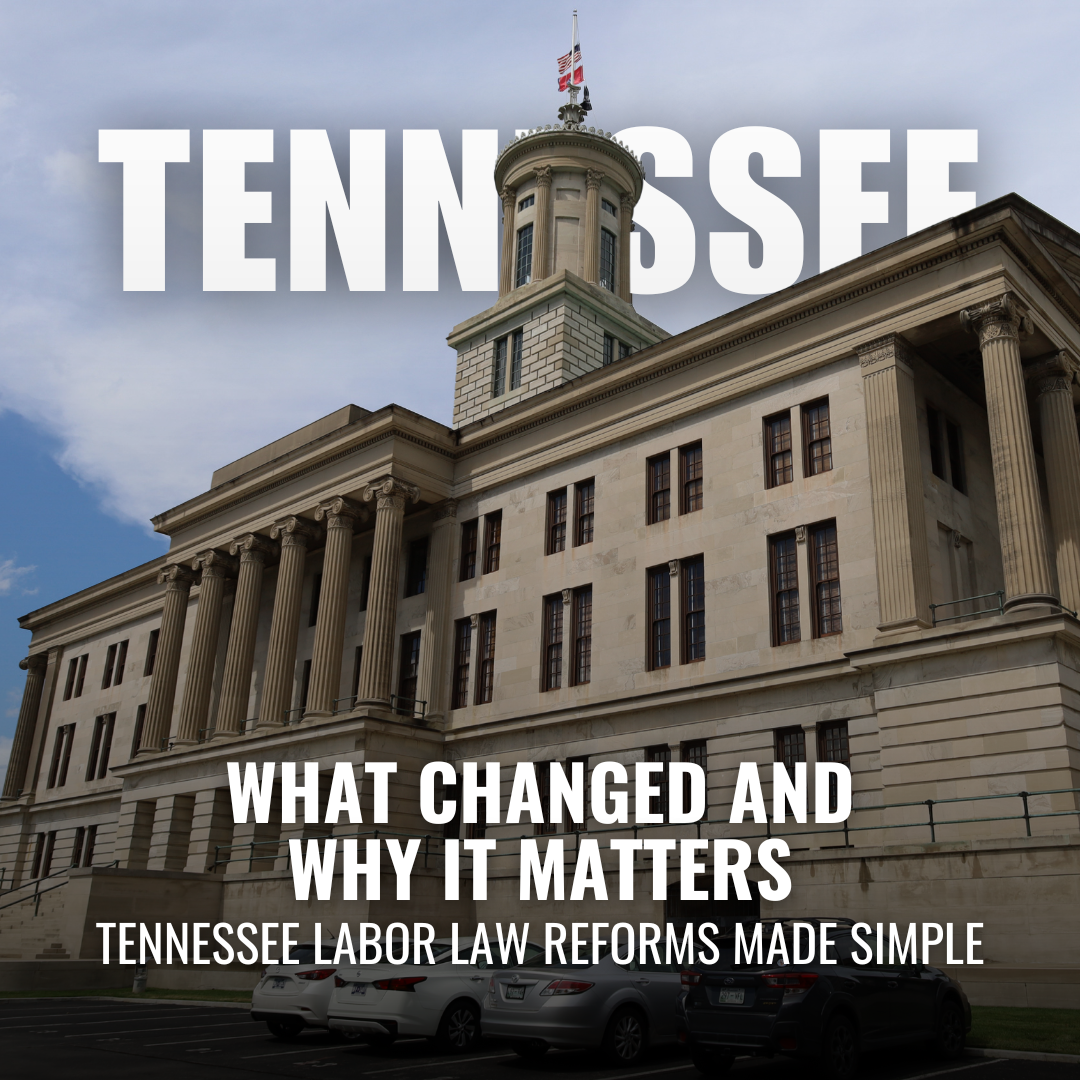
If you live and work in Tennessee, understanding your rights and responsibilities on the job is more important than ever. With 2025 well underway, the state continues to update its labor laws to reflect both federal standards and local workforce needs. Whether you're clocking into a small business, working for the state, or managing a team, staying informed can help avoid legal trouble and foster a better workplace. Here's a straightforward review of what’s new—and what still matters—in Tennessee’s labor law landscape.
Major Updates in Tennessee Labor Laws (2025)
Meal and Rest Breaks
Tennessee law keeps things simple when it comes to breaks, but there are important rules to follow.
- 30-minute unpaid break is required for employees working six consecutive hours.
- This break must come after the first hour of work—not at the very beginning.
- Certain industries (like food service or security) are exempt if rest opportunities are frequent.
- No additional break time is required by the state beyond this.
- Federal law does not mandate any breaks, so Tennessee’s rule stands alone for most private sector workers.
? Why it matters: This policy protects time for a real break—but may still feel limiting in fast-paced or understaffed jobs.
Family and Medical Leave (FMLA + State Law)
Balancing work and personal or family health issues is a major concern—and the laws try to offer support.
Federal FMLA protections include:
- Up to 12 weeks of unpaid, job-protected leave for childbirth, adoption, or serious health conditions.
- Applies to employers with 50 or more employees.
- Health benefits continue during leave.
- Military caregiver leave extends to 26 weeks.
Tennessee-specific additions include:
- Paid caregiving leave for state employees—covering adoption or caring for a seriously ill relative.
- Extra protections for parental and pregnancy leave under state law.
- Employees may use up to 10 days of accrued leave (sick, annual, or compensatory) during FMLA leave.
- Some workplaces may also offer leave for domestic violence-related needs.
⚖️ The takeaway: While FMLA is a lifeline, it’s unpaid for most. State employees have better coverage, but private-sector workers may still struggle during extended absences.
Parental Leave in Tennessee
Welcoming a new child is a major life event—and the law aims to support that.
- Eligible employees (working full-time for 12+ months) can take up to 4 months off for pregnancy, childbirth, or adoption.
- Applies to workplaces with 100+ full-time employees at one site.
- Leave may be paid or unpaid—the choice is up to the employer.
- 3 months’ notice is generally required unless there’s a medical or adoption emergency.
- Job protection is built in: you’re entitled to return to the same or a comparable position.
- Public employees (state or education) get 6 weeks of paid leave.
?? Reality check: It’s great that parental leave is recognized, but not all workers qualify—and pay isn’t guaranteed unless you're in the public sector.
Jury Duty Leave
Doing your civic duty shouldn’t cost you your job—or your paycheck.
- Employers must excuse employees for jury service.
- Regular pay is required, minus any juror compensation (unless the employer waives the deduction).
- Temporary workers (<6 months) aren’t covered by these rules.
- Employees must show the jury summons the next workday.
- Employers can’t punish or demote employees for attending jury duty.
? Bottom line: This law protects participation in the legal system, but temporary workers may miss out.
Voting Leave
Your voice matters—at the polls and at work.
- Up to 3 hours of paid leave to vote, if your shift overlaps polling hours.
- If your shift starts 3+ hours after polls open or ends 3+ hours before they close, you don’t qualify.
?️ Simple and fair: This ensures time to vote without penalizing your paycheck—just don’t forget to check your polling hours.
Child Labor Laws
Tennessee sets clear limits to protect working minors.
- Minimum age to work: 14 years old.
- 14–15-year-olds:
- Max 3 hours/day and 18 hours/week when school is in session.
- Can work up to 8 hours/day and 40 hours/week when school is out.
- Can’t work past 7 p.m. on school nights or past 9 p.m. otherwise.
- 16–17-year-olds:
- Can work late (until midnight), but only 3 nights/week with parental consent.
- Hazardous jobs are off-limits (mining, logging, heavy machinery, etc.).
- Exceptions apply for minors in approved Work-Based Learning (WBL) programs.
? Big picture: The goal is to support learning and safety—though young workers and employers need to be aware of all the limits.
Right-to-Work Policy
Tennessee continues to be a right-to-work state—and that hasn’t changed.
- Employees can’t be forced to join or pay dues to a union.
- Union membership is completely voluntary.
- Workers can still organize and bargain collectively with a representative.
- In 2024, 136,000 workers were union members, with another 28,000 represented but not members.
? Impact: This policy gives individual freedom, but critics say it may weaken union power and benefits.
Conclusion: What This Means for You in 2025
Tennessee’s labor laws remain a mix of federal protections and state-specific tweaks that reflect a fairly traditional, employer-friendly stance. There are clear wins for public employees when it comes to paid leave, and solid job protections in cases like jury duty, parental leave, and workplace breaks. On the flip side, private sector employees—especially in smaller companies—might find themselves navigating unpaid time off and minimal break entitlements.
For employers, the challenge lies in compliance—knowing when a law kicks in (like company size thresholds) and providing proper notice, documentation, and job security. For employees, the key is awareness: knowing your rights can help you advocate for yourself in both routine and tough life moments.
Important Note to Consider
This content is intended for informational purposes only. Although we strive to present accurate and up-to-date information, we cannot guarantee that it is completely free from errors or omissions. We encourage users to verify any important details independently and not rely solely on the information provided here.