Employee Rights South Carolina 2025
What’s New for South Carolina Workers in 2025? A Clear Look at Labor Law Changes
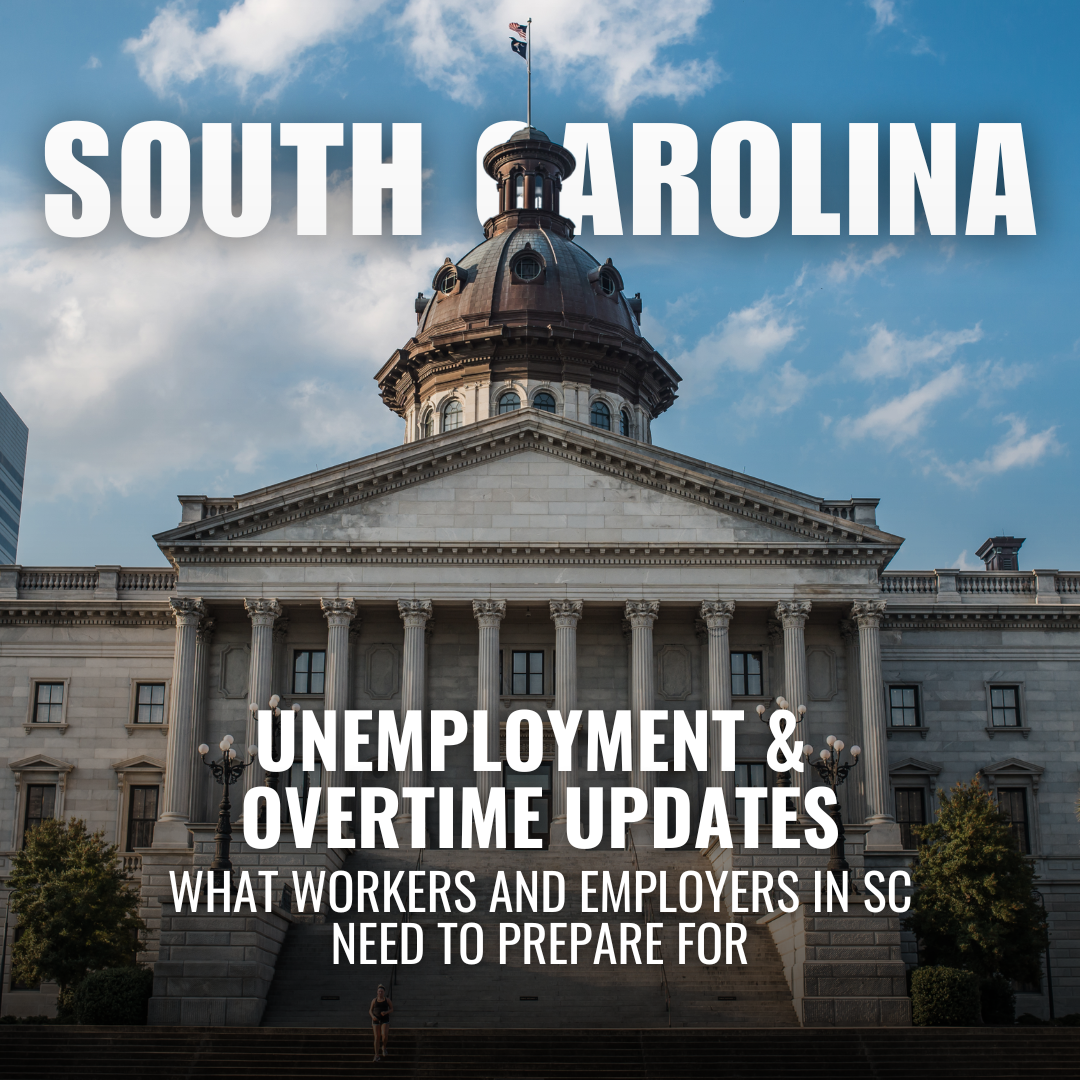
In 2025, South Carolina workers and employers are navigating some significant shifts in labor law. From how long unemployment benefits last to who qualifies for overtime pay, these updates aim to strike a balance between economic growth and worker support. If you’re wondering how these changes could affect your paycheck or your hiring decisions, here’s a straightforward breakdown of what’s new, why it matters, and what to keep in mind as we move through the year.
Key Labor Law Updates in South Carolina for 2025
1. Sliding Scale for Unemployment Benefits
Starting January 14, 2025, South Carolina officially tied the number of weeks someone can receive unemployment benefits to the state’s unemployment rate.
- When the job market is strong (5.5% unemployment or less): Benefits last a maximum of 12 weeks.
→ This is meant to encourage quicker reemployment when more jobs are available. - When unemployment rises (up to 9%): Benefits can extend up to 19 weeks, giving job seekers a longer cushion during tougher economic periods.
- It’s not a fixed duration: South Carolina uses a sliding scale, adjusting benefit length based on real-time economic conditions.
- Goal: Balance a safety net for job seekers with a push toward workforce re-entry as soon as the job market allows.
? Benefit: Workers have more support during downturns.
? Challenge: In a strong economy, the shorter duration may pressure some to accept lower-paying or mismatched jobs just to stay afloat.
2. Higher Overtime Pay Threshold Under Federal Law
Another major update comes from the U.S. Department of Labor and affects workers in South Carolina and beyond.
- As of January 1, 2025, the overtime salary threshold jumped from $455/week to $1,128/week (that’s $58,656/year).
- If an employee earns less than this amount, they are now eligible for overtime pay — even if they’re salaried.
- This affects jobs classified under the “white collar” exemptions like executive, administrative, and professional roles.
- Automatic updates every 3 years will keep the threshold in line with wage growth.
- The change is based on the 35th percentile of weekly wages in the South, making it directly relevant to South Carolina’s workforce.
? Benefit: More than 4.3 million workers nationwide — including many in South Carolina — will now qualify for extra compensation when they work over 40 hours.
? Challenge: Employers may face higher payroll costs and may need to reclassify roles or reduce hours to manage expenses.
What This Means for Workers and Employers in 2025
For workers in South Carolina, these updates bring both opportunity and urgency. If you’re on the job hunt, your access to unemployment support may shift quickly depending on the economy. And if you’re salaried, you might find yourself newly eligible for overtime pay you weren’t entitled to last year.
For employers, it’s a time to review job classifications and payroll strategies. The overtime rule in particular could require some reshuffling of roles, while the flexible unemployment policy might influence how you approach hiring and retention during different economic cycles.
Conclusion
South Carolina’s 2025 labor law changes show a clear intention: support the workforce without stalling the economy. Whether you're running a small business or clocking hours at your job, understanding these updates will help you plan better and protect your rights or bottom line. The landscape might feel a little more dynamic, but with a bit of knowledge, you can navigate it with confidence.
Important Note to Consider
This content is intended for informational purposes only. Although we strive to present accurate and up-to-date information, we cannot guarantee that it is completely free from errors or omissions. We encourage users to verify any important details independently and not rely solely on the information provided here.