Oregon Workplace Rights 2025
How Oregon’s 2025 Labor Law Reforms are Shaping the Workplace
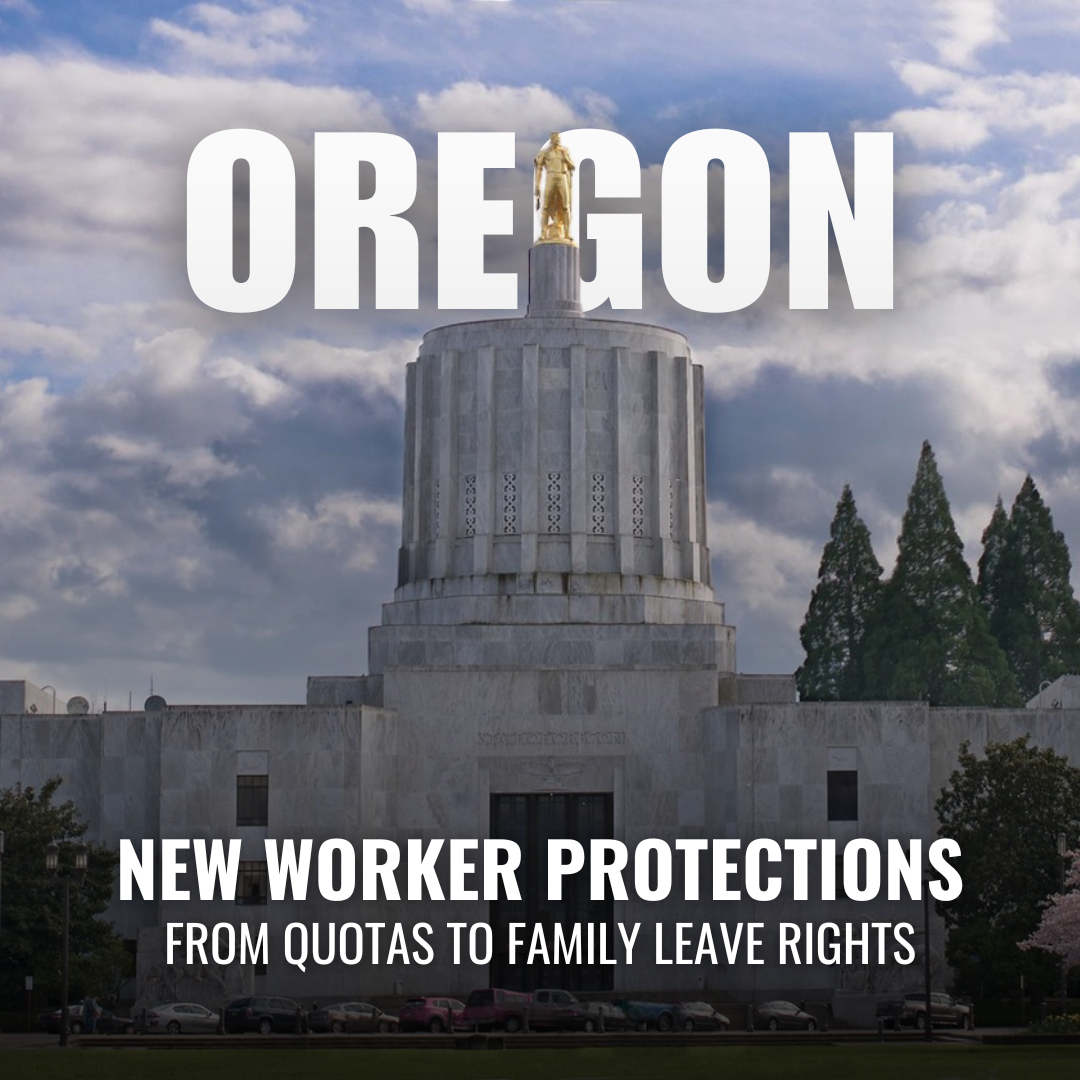
As of January 1, 2025, Oregon has officially rolled out a series of updated labor laws designed to modernize workplace protections, improve fairness, and promote transparency. From safeguarding warehouse workers to revamping wage garnishment rules and reinforcing family leave rights, these updates reflect the state’s continued push toward more equitable working conditions.
Whether you're an employee wondering how these changes affect your day-to-day, or an employer scrambling to stay compliant, this review will walk you through the key updates in plain language—highlighting both the perks and the practical challenges.
Warehouse Worker Protections (House Bill 4127)
What’s new: Oregon is cracking down on the overuse of quotas in warehouses—especially those with high-volume distribution centers.
Key points:
- Written quota notices are now required. Employers must give employees clear, written details about any quotas, including expected performance levels and consequences for not meeting them.
- No notice, no punishment. If an employee hasn’t been given this documentation, the employer can’t discipline or fire them for missing quota targets.
- Employees can request their productivity data. Workers can ask for their quota documents and 90 days’ worth of work speed data.
- Long-term recordkeeping is mandatory. Employers must keep these records for at least 10 years and provide them to Oregon’s Bureau of Labor and Industries (BOLI) upon request.
- Applies to large employers only. The law targets employers with 100+ employees at one warehouse or 1,000+ across multiple Oregon sites.
✅ Why it matters: This law brings transparency to an industry known for tight timelines and little worker input.
⚠️ Challenge for employers: Adapting internal systems to track, store, and share detailed productivity data long-term.
Wage Garnishment Reforms (SB 1595)
What’s new: Oregon has made it harder for creditors to take a large chunk out of your paycheck.
Key points:
- Higher minimum exemptions. Starting January 1, 2025, the first $305 of each paycheck is protected from garnishment.
- That amount increases:
- $338 per paycheck starting July 2025
- $400 per paycheck starting July 2026
- 30x the state minimum wage starting July 2027 (adjusted annually for inflation)
- Cap on garnishment amounts. Creditors can’t take more than 25% of disposable income, whichever is lower.
- Updated bank responsibilities. Banks must follow new procedures when processing wage garnishment, including checking for protected benefits.
- Payroll system updates required. Employers must make sure their systems are aligned with these limits.
✅ Why it matters: Helps low-to-middle-income workers hang on to more of their take-home pay.
⚠️ Challenge for employers: Requires payroll reconfiguration and close attention to garnishment requests to avoid legal pitfalls.
Noncompete Agreements
What’s new: A federal ban almost took effect in 2024, but legal challenges blocked it. Oregon continues to follow its stricter state law from 2021.
Key points:
- A noncompete is only valid if:
- Employees get written notice of the agreement at least two weeks before starting OR
- It’s signed during a bona fide promotion.
- Income requirement: Only valid if the employee makes over $113,241/year at the time of leaving the job (2024 figure, adjusted annually).
- Limited duration: Noncompetes can’t last more than 12 months after employment ends.
- Employer’s burden: The employer must give the employee a signed copy of the agreement within 30 days of termination.
- Protected business interest is required: Like trade secrets or confidential plans.
✅ Why it matters: Protects workers from being locked out of job opportunities in their industry.
⚠️ Challenge for employers: Any misstep in the timeline or documentation can render the agreement void.
Family and Medical Leave Protections
What’s new: Oregon blends federal and state leave laws to offer broader protection and more support.
Key points:
- Unpaid leave via FMLA (federal) + paid leave via Paid Leave Oregon (state).
- Up to 12 weeks of job-protected leave for:
- Parental bonding
- Medical conditions (employee or family)
- Pregnancy-related complications (plus 2 extra weeks)
- Safe leave (e.g., domestic violence)
- Health insurance must continue during the leave period.
- Intermittent leave is allowed in some cases (e.g., medical treatments).
- Employees must give advance notice when possible.
✅ Why it matters: Gives employees time to care for health and family without sacrificing job security.
⚠️ Challenge for employers: Coordinating multiple overlapping policies (FMLA, OFLA, Paid Leave Oregon) can get tricky.
Pregnancy Accommodations
What’s new: Oregon reinforced protections for pregnant workers, including specific rights around breastfeeding.
Key points:
- Employers with 6 or more employees must provide reasonable accommodations—from more breaks to modified duties.
- Workers can express milk as needed until the child is 18 months old.
- It's illegal to:
- Deny job opportunities based on needed accommodations.
- Force unnecessary accommodations.
- Require family leave if other reasonable accommodations are available.
- Retaliate against those who ask for accommodations.
✅ Why it matters: Supports working parents and promotes gender equity in the workplace.
⚠️ Challenge for employers: May need to modify schedules, roles, or physical spaces to stay compliant.
Bias Crime Reporting Obligations
What’s new: Oregon continues to treat bias crimes (formerly called “hate crimes”) with high legal priority.
Key points:
- Bias Crime in the 2nd Degree (misdemeanor): Includes physical contact, threats, or property interference based on perceived identity (e.g., race, gender identity).
- Bias Crime in the 1st Degree (felony): Involves physical injury or weapon use.
- Employers must take reported incidents seriously and respond in accordance with public safety and anti-discrimination laws.
✅ Why it matters: Creates safer, more respectful workplaces.
⚠️ Challenge for employers: Requires awareness and clear protocols for handling bias complaints appropriately.
Employee Rights Refresher
Oregon workers still benefit from a strong foundation of protections. These include:
- Breaks and meal periods (10-min paid rest every 4 hrs, 30-min unpaid meal over 6 hrs)
- Equal pay for equal work, regardless of sex, race, or other protected classes
- Protected sick leave, based on employer size
- Workplace safety enforcement by Oregon OSHA
- Right to report violations without fear of retaliation (whistleblower protections)
Conclusion: Why These Updates Matter in 2025
Oregon’s 2025 labor law updates send a clear message: transparency, fairness, and worker dignity are not optional—they’re required. These changes can empower employees to better understand and assert their rights, while also compelling employers to be more intentional and compliant in how they manage people and processes.
That said, the updates are not without challenges. Employers may face operational hurdles—like retooling payroll or revising employee agreements. Meanwhile, workers still need to stay informed and proactive to fully benefit from these protections.
Ultimately, these changes aim to create a more balanced workplace, where expectations are clear, rights are respected, and accountability goes both ways.
Important Note to Consider
This content is intended for informational purposes only. Although we strive to present accurate and up-to-date information, we cannot guarantee that it is completely free from errors or omissions. We encourage users to verify any important details independently and not rely solely on the information provided here.