Women’s Health Workplace Discrimination
Equinox Fitness to Pay $48,000 Over Disability and Sex Discrimination Linked to Menstrual Health
Background
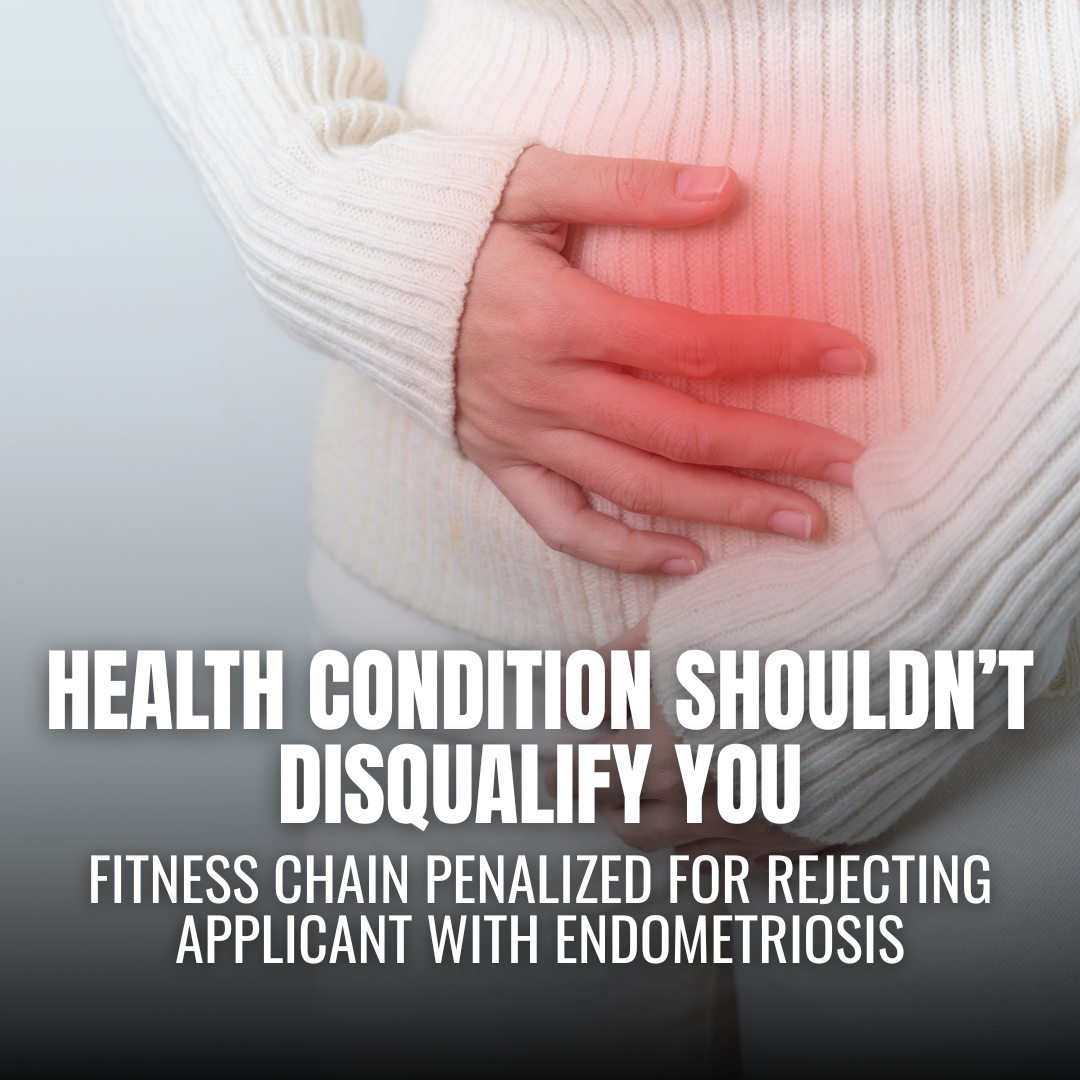
Equinox Holdings, Inc., a nationwide operator of fitness clubs, faced legal action after declining to hire a qualified female applicant who disclosed that she experienced painful menstrual cramps due to endometriosis—a chronic reproductive health condition. The case stems from actions taken by Equinox during the applicant's interview process for a front desk associate position in Washington, D.C.
Incident Details
The applicant, who had prior experience in the fitness industry, was advancing through Equinox’s interview process when she requested a short delay for her second-round interview due to severe menstrual pain. While Equinox acknowledged her qualifications as “excellent,” it ultimately rejected her candidacy. According to the lawsuit, the rejection was explicitly tied to concerns that her menstrual cycle might lead to future absences.
This communication was documented in a follow-up text message from a manager, stating that the decision was made solely due to concerns over potential future absences related to her menstrual condition.
Legal Background
The conduct described in the complaint allegedly violated two key federal statutes:
- The Americans with Disabilities Act (ADA) – prohibits discrimination against individuals with disabilities and requires employers to consider reasonable accommodations.
- Title VII of the Civil Rights Act of 1964 – prohibits employment discrimination based on sex, which includes gender-based assumptions related to health conditions like menstruation.
The lawsuit, EEOC v. Equinox Holdings, Inc. (Civil Action No. 1:24-cv-03597), was filed in the U.S. District Court for the District of Columbia after pre-litigation settlement efforts failed.
Settlement and Relief
To resolve the lawsuit, Equinox agreed to the following under a two-year consent decree:
- Payment of $48,000 to the affected applicant.
- Development and implementation of anti-discrimination policies, particularly relating to reasonable accommodation procedures.
- Mandatory training for staff across five Equinox locations in the Washington, D.C. area, with specialized sessions for hiring managers and HR personnel.
- Posting of notices regarding employee rights under ADA and Title VII at all relevant locations.
Key Takeaways
- Employers must avoid making hiring decisions based on assumptions related to menstrual health or potential future absences.
- Chronic conditions like endometriosis may qualify as disabilities under the ADA, requiring reasonable accommodation.
- Training and clear policies are essential for ensuring compliance with anti-discrimination laws, particularly during hiring.
Conclusion
The Equinox case demonstrates the legal and financial risks employers face when making employment decisions based on sex- or disability-related assumptions. By settling the lawsuit and adopting stronger compliance policies, Equinox highlights the need for companies to evaluate candidates based on merit and to foster inclusive hiring practices. This resolution also underscores the growing recognition of menstrual health issues in the context of workplace rights.