Vaccine Mandate Lawsuit
Children’s Healthcare of Atlanta Settles EEOC Disability Lawsuit for $50,000 Over Flu Vaccine Accommodation Denial
Background
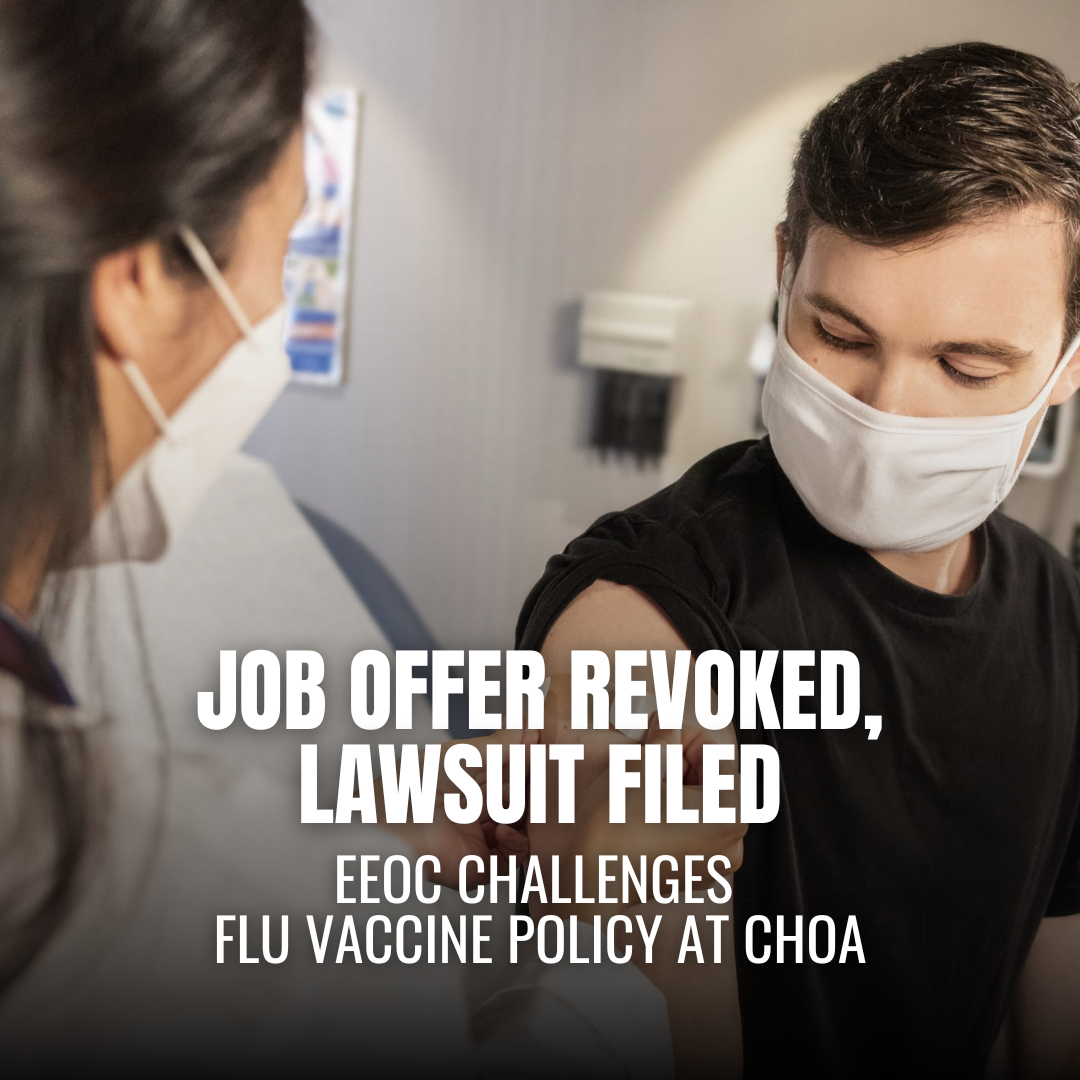
Children’s Healthcare of Atlanta (CHOA), a major pediatric healthcare provider in Georgia, has reached a settlement with the U.S. Equal Employment Opportunity Commission (EEOC) following claims that it rescinded a job offer due to a disability-related accommodation request.
Incident Details
In March 2021, CHOA extended a job offer for a registration associate position to an applicant who then requested an exemption from the company's flu vaccine requirement. The exemption request was based on the applicant’s severe egg allergy—a disability that affects her ability to take standard flu vaccines. She also expressed a willingness to receive an alternative version of the vaccine that did not contain egg proteins.
Despite this, CHOA rescinded the offer and instead hired an internal candidate who did not require any exemption. The EEOC alleged that this action constituted disability discrimination in violation of federal law.
Legal Background
The Americans with Disabilities Act (ADA) prohibits employers from discriminating against qualified individuals with disabilities in all aspects of employment, including hiring. The law requires employers to consider reasonable accommodations, such as alternative medical procedures, unless doing so would pose an undue hardship.
The EEOC filed the lawsuit in the U.S. District Court for the Northern District of Georgia (Case No. 1:24-cv-04089-SDG-RDC) after unsuccessful efforts to resolve the matter through conciliation.
Settlement and Remedial Measures
Under a court-approved consent decree, CHOA will:
- Pay $50,000 in monetary relief to the affected applicant.
- Revise its flu vaccination policy to ensure compliance with the ADA.
- Post workplace notices informing employees of their ADA rights.
- Provide ADA training to relevant personnel.
- Submit periodic reports to the EEOC outlining any future disability-related complaints tied to vaccine requirements, including actions taken by CHOA in response.
Key Takeaways
- Applicants are protected under the ADA during the hiring process—not just existing employees.
- Employers must assess accommodation requests rather than issue blanket denials based on policies.
- Health-related requirements must allow flexibility when a disability is involved and reasonable alternatives exist.
Conclusion
The resolution of this case reinforces the legal obligation of employers to evaluate disability-related accommodation requests fairly, especially in healthcare settings where vaccine policies are common. Denying a job based solely on a disability-linked exemption—without considering alternatives—can expose employers to significant legal consequences. The CHOA settlement emphasizes the importance of balancing public health policies with individual rights protected under federal law.