Anti-discrimination Training For Employers
Austin Bar Pays $42,000 to Settle Pregnancy Discrimination Lawsuit
Background
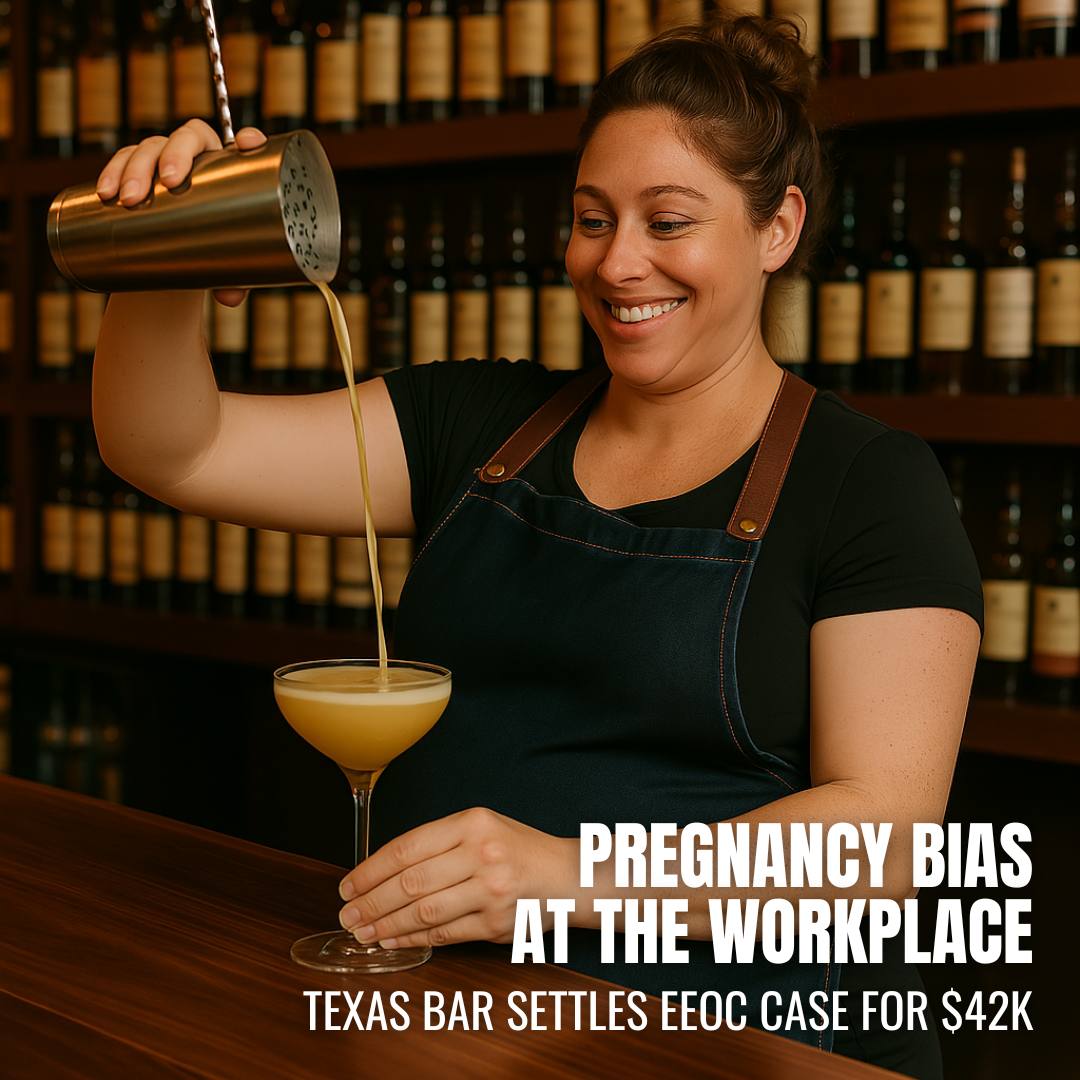
A well-known bar in Austin, Texas—Corner Bar—has agreed to a $42,000 settlement following allegations of pregnancy discrimination brought by the U.S. Equal Employment Opportunity Commission (EEOC). The case involves actions taken against a bartender who was terminated shortly after informing management of her pregnancy.
Corner Bar is operated by three limited liability companies managing several hospitality businesses in the Austin area.
Incident Details
According to the EEOC's complaint, the female bartender's work hours were reduced soon after her pregnancy became visibly noticeable. Later, after she was briefly hospitalized due to a virus, her manager allegedly called to inform her that she was being terminated. The complaint states the manager justified the decision by claiming she had become “too much of a liability” and expressed concerns that “something bad” might happen to her.
Following this termination, the employee’s remaining scheduled shifts were reassigned to other workers, effectively ending her employment.
Legal Background
This case was brought under Title VII of the Civil Rights Act of 1964, as amended by the Pregnancy Discrimination Act (PDA). The PDA prohibits employers from discriminating on the basis of pregnancy, childbirth, or related medical conditions.
In addition, protections under the Pregnant Workers Fairness Act (PWFA) and Americans with Disabilities Act (ADA) may apply when pregnant employees experience health complications requiring accommodation, provided those accommodations don’t cause undue hardship to the employer.
The lawsuit was filed in the U.S. District Court for the Western District of Texas, Austin Division under Civil Action No. 1:23-cv-539.
Settlement and Relief
Under a three-year consent decree entered on May 20th by U.S. District Judge Alan D. Albright, Corner Bar will:
- Pay $42,000 in monetary relief to the former employee.
- Adopt and enforce a written anti-discrimination policy covering pregnancy-related protections.
- Provide mandatory training for all employees on federal anti-discrimination laws.
- Post official notices in the workplace affirming employee rights and management responsibilities.
- Refrain from discriminating against employees or applicants on the basis of pregnancy.
These provisions aim to prevent future violations and ensure workplace equity for pregnant employees.
Key Takeaways
- Pregnancy is a Protected Condition
Reducing work hours or terminating employment due to pregnancy is illegal under federal law. - Policies and Training Are Essential
Employers must actively educate staff and enforce anti-discrimination policies to remain compliant. - Consent Decrees Have Long-Term Impact
Court-ordered compliance measures like policy updates and monitoring can stay in effect for years.
Conclusion
This case reinforces that pregnancy discrimination, even in smaller hospitality businesses, is taken seriously under federal law. Employers must provide equal treatment to pregnant workers and cannot use assumptions about liability or performance as a basis for adverse employment actions.