Alaska Pay Raise
Alaska’s Minimum Wage Increases: A Step Toward Fair Pay
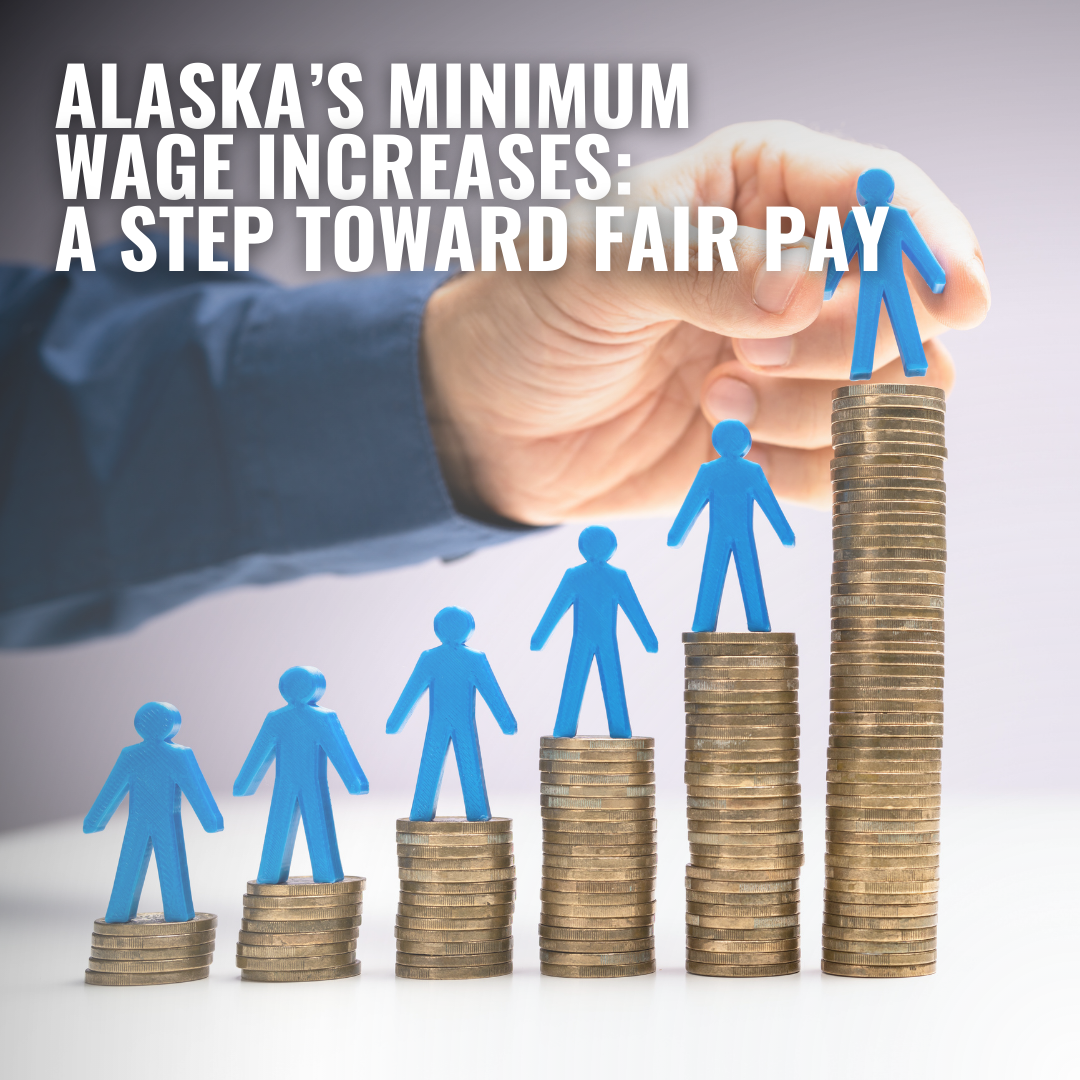
Alaska’s decision to raise its minimum wage under Ballot Measure No. 1 marks a major shift in how workers are compensated across the state. The initiative lays out a gradual increase in the minimum wage, followed by annual adjustments tied to inflation, ensuring that wages keep pace with the rising cost of living.
Key Changes in Minimum Wage
- July 1, 2025 – Minimum wage increases to $13.00 per hour
- July 1, 2026 – Minimum wage rises to $14.00 per hour
- July 1, 2027 – Minimum wage reaches $15.00 per hour
- January 1, 2028, and beyond – Wages will be adjusted annually based on inflation, ensuring continued increases over time
Impact on Salary-Exempt Employees
Under Alaska Statute 23.10.055, the salary of exempt employees must be at least twice the minimum wage based on a 40-hour workweek. As the minimum wage increases, the minimum salary level for exempt employees will also rise:
- $1,040.00 per week ($54,080 per year) on July 1, 2025
- $1,120.00 per week ($58,240 per year) on July 1, 2026
- $1,200.00 per week ($62,400 per year) on July 1, 2027
- Adjustments thereafter based on inflation
Salary-exempt employees must still meet the duties test for the executive, administrative, or professional exemption to qualify for overtime exemption.
Impact on Workers and Employers
For employees, these changes mean higher earnings, making it easier to afford essentials like housing, food, and healthcare. The scheduled increases provide predictability, allowing workers to plan for the future without worrying about wages stagnating.
For businesses, especially small ones, the wage hikes present challenges in balancing payroll costs. Employers may need to rethink pricing, staffing, or efficiency strategies. However, a well-paid workforce could also lead to improved employee retention, higher morale, and increased local spending, benefiting the broader economy.
Economic Considerations
Alaska’s cost of living has been a long-standing concern, and this law aims to address that by ensuring wages don’t lag behind inflation. By tying future increases to the Consumer Price Index, the initiative prevents the minimum wage from becoming outdated. Additionally, the requirement that Alaska’s minimum wage always remains at least $2.00 above the federal minimum wage ensures it stays competitive with neighboring states.
A Step Toward Financial Stability
With this wage increase, Alaska joins other states in taking proactive measures to support workers. The long-term effects will depend on how businesses adapt and whether these changes lead to broader economic stability. As the law takes effect in the coming years, both workers and employers will need to adjust, but the structured approach offers a roadmap for gradual adaptation rather than sudden disruption.